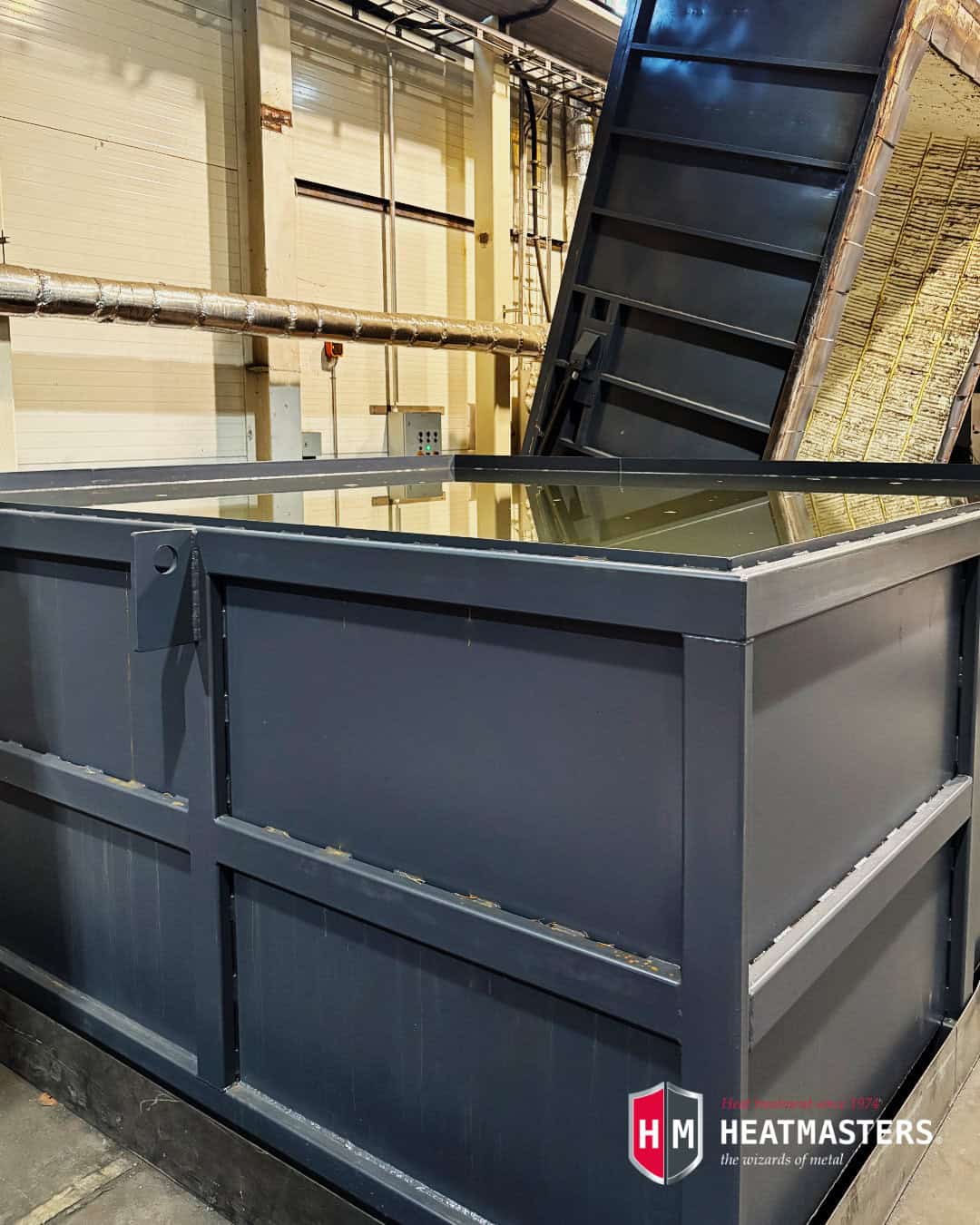
Industrial quenching pool at Heatmasters Service Center used for controlled cooling in metal heat treatment">
What Is Quenching in Heat Treatment? Purpose, Process and Industrial Applications

March 6, 2026

Quenching is one of the most important processes used in industrial heat treatment. It is widely applied when high hardness, strength and wear resistance are required in metal components.

In simple terms, quenching involves rapidly cooling a material after it has been heated to a specific temperature. The rapid cooling alters the microstructure of the metal, creating a harder and stronger material.

Quenching is particularly important in steel heat treatment, where it is used to achieve the mechanical properties required for demanding industrial applications such as heavy machinery, energy production equipment and automotive components.

Because quenching can significantly change the internal structure of a material, the process must be carefully controlled to ensure reliable and predictable results.

What Is the Purpose of Quenching?

The primary goal of quenching is to increase the hardness and strength of metals by rapidly cooling them from a high temperature. When steel is heated above its critical transformation temperature and then cooled quickly, the microstructure transforms into harder phases such as martensite.

This transformation dramatically increases the hardness and strength of the material.

However, increased hardness often comes with increased brittleness. For this reason, quenching is frequently followed by tempering, which helps restore toughness and reduce the risk of cracking.

Key purposes of quenching include:

  • Increasing hardness and strength
  • Improving wear resistance
  • Enhancing load-bearing capacity of components
  • Preparing materials for further treatments such as tempering
  • Achieving specific microstructural transformations in steel

These properties are essential for components that must perform reliably under high mechanical stress or abrasive conditions.

How the Quenching Process Works

The quenching process typically consists of three main stages.

Heating

The material is first heated to a temperature where its internal structure transforms into austenite. The exact temperature depends on the steel grade and the desired metallurgical result.

Uniform heating is critical to ensure that the transformation occurs consistently throughout the component.

Soaking

Once the target temperature has been reached, the material is held at that temperature long enough to allow the internal structure to stabilize.

This stage ensures that the entire component reaches the desired metallurgical state before cooling begins.

Rapid Cooling

After soaking, the material is rapidly cooled in a quenching medium. The speed of cooling determines the final microstructure and mechanical properties of the material.

Common quenching media include:

  • Water
  • Oil
  • Polymer solutions
  • Air or gas

The selection of quenching medium depends on the material type, component geometry and the desired hardness level.

Common Quenching Methods

Different quenching methods are used depending on the material and industrial requirements.

Water Quenching

Water provides very fast cooling rates and is often used when maximum hardness is required. However, rapid cooling can also introduce significant thermal stress, increasing the risk of distortion or cracking.

Oil Quenching

Oil quenching provides slower and more controlled cooling compared to water. This reduces the risk of cracking and distortion while still achieving significant hardness.

Oil quenching is widely used for alloy steels and precision components.

Air or Gas Quenching

Air or gas quenching provides a slower cooling rate and is often used for materials that require lower cooling intensity or for components with complex geometries.

Modern heat treatment furnaces often use controlled gas quenching systems to achieve consistent results.

Benefits of Quenching in Industrial Applications

When applied correctly, quenching provides several advantages for industrial manufacturing.

One of the most important benefits is improved wear resistance. Harder materials can withstand abrasive conditions and maintain their performance for longer periods.

Quenching also increases the load-bearing capacity of components. This is critical in applications where parts are exposed to high mechanical stress or repetitive loading.

Other important benefits include:

  • Increased material hardness
  • Improved strength and durability
  • Enhanced wear resistance
  • Improved performance in demanding environments

Because of these benefits, quenching is widely used in the production of gears, shafts, bearings, tools and other critical mechanical components.

Challenges and Process Control in Quenching

Although quenching provides significant benefits, the process must be carefully controlled to avoid potential problems.

Rapid cooling can introduce internal stresses that may cause distortion or cracking, particularly in large or complex components. The risk of these issues depends on factors such as material composition, component geometry and cooling rate.

To achieve reliable results, industrial quenching processes rely on precise temperature control, carefully selected quenching media and advanced monitoring systems.

Professional heat treatment providers use controlled furnace technology and documented process parameters to ensure consistent and repeatable outcomes.

Industrial Quenching Solutions by Heatmasters

Successful quenching requires technical expertise, precise temperature control and reliable equipment. Industrial projects often involve large components, demanding specifications and strict quality requirements.

Heatmasters provides advanced heat treatment services and equipment designed for demanding industrial environments.

Our capabilities include:

  • Industrial heat treatment services for complex and large components
  • Advanced furnace technology with controlled heating and cooling
  • Process monitoring and documentation for demanding industry standards
  • Tailored heat treatment solutions based on customer requirements

With decades of experience in thermal processing, Heatmasters supports customers in achieving consistent material properties and reliable performance in critical applications.

Quenching as a Critical Step in Heat Treatment

Quenching plays a central role in modern metallurgy and industrial manufacturing. Its ability to significantly increase hardness and strength makes it essential for producing high-performance components used in demanding environments.

When properly controlled and combined with processes such as tempering, quenching allows manufacturers to achieve the optimal balance between hardness, strength and toughness.

For industries where reliability, durability and performance are essential, professional heat treatment solutions are a key part of the manufacturing process.

👉 If you want to learn more about heat treatment services or equipment, our experts at Heatmasters are ready to help.

SHI FW Energia FAKOP Sp. z o.o., a subsidiary of Sumitomo SHI FW and Heatmasters Poland once again carried out a joint-defined solution annealing heat treatment process for high alloyed stainless steel coil assemblies.">
What Is Normalizing in Steel Heat Treatment?

March 5, 2026

Normalizing is a widely used heat treatment process in steel manufacturing and heavy industry. The purpose of normalizing is to refine the grain structure of steel, improve mechanical properties and ensure consistent material performance in demanding applications.

In steel heat treatment, normalizing involves heating the material to a temperature above its critical transformation range and then allowing it to cool naturally in air. This controlled process produces a more uniform and refined microstructure compared to many other heat treatment methods.

Normalizing is particularly valuable for structural steels, welded components and parts that require reliable strength, toughness and dimensional stability.

What Is the Purpose of Normalizing in Steel?

The main objective of normalizing in steel heat treatment is to improve the internal structure of the material after manufacturing processes such as casting, forging or hot rolling. These processes often produce uneven grain structures and internal stresses that can affect the mechanical performance of steel components.

By applying normalizing heat treatment, manufacturers can restore structural consistency and achieve predictable material properties.

Key purposes of normalizing include:

  • Refining the grain structure of steel
  • Improving strength and toughness
  • Reducing internal stresses from manufacturing processes
  • Enhancing uniformity of mechanical properties
  • Preparing materials for further heat treatment processes

For many industrial components, achieving a uniform microstructure is essential to ensure reliable performance during long-term operation.

How the Normalizing Heat Treatment Process Works

The normalizing process consists of three main stages that must be carefully controlled to achieve the desired metallurgical results.

Heating the Steel

In the first stage, the steel is heated to a temperature above its upper critical point. This allows the internal structure of the steel to transform into austenite, a high-temperature phase of iron that enables the microstructure to reset.

The exact temperature depends on the type and composition of the steel.

Holding at Temperature

Once the target temperature has been reached, the material is held at that temperature for a defined period. This allows the internal structure of the steel to become uniform throughout the component.

The soaking time depends on the size, thickness and material grade of the component.

Air Cooling

Unlike some other heat treatment processes, normalizing involves cooling the material in still air outside the furnace. This faster cooling rate compared to furnace cooling produces a finer grain structure and improved mechanical properties.

The result is steel that is stronger, more uniform and better suited for demanding industrial applications.

Benefits of Normalizing in Steel Heat Treatment

Normalizing offers several important advantages in steel processing and manufacturing.

One of the most significant benefits is grain refinement. A finer and more uniform grain structure improves the mechanical performance of steel and increases its resistance to fatigue and mechanical stress.

Normalizing also helps eliminate structural irregularities that may occur during earlier manufacturing stages.

Other important benefits include:

  • Improved strength and toughness
  • Better uniformity throughout the material
  • Reduced internal stresses
  • Improved machinability for further processing
  • Increased reliability of steel components

What Is the Difference Between Normalizing and Annealing?

Normalizing and annealing are both heat treatment processes used to improve the properties of metals, but they serve slightly different purposes and produce different results.

The main difference lies in the cooling process.

In annealing, the material is cooled slowly inside the furnace. This slow cooling results in a softer material with improved ductility and reduced hardness.

In normalizing, the material is cooled in air outside the furnace. This faster cooling rate produces a finer grain structure and typically results in higher strength and hardness compared to annealed steel.

In practice, annealing is often used when maximum softness and formability are required, while normalizing is chosen when improved strength and structural consistency are needed.

Industrial Normalizing Solutions by Heatmasters

Achieving reliable results in normalizing heat treatment requires precise temperature control, expert process design and suitable equipment.

Industrial components are often large, complex and subject to demanding standards. This makes professional heat treatment expertise essential.

Heatmasters provides advanced heat treatment services and equipment designed for demanding industrial environments. With decades of experience in thermal processing, Heatmasters supports customers in achieving reliable and repeatable heat treatment results.

Our capabilities include:

  • Industrial heat treatment for large steel components and structures
  • Advanced furnace technology and thermal processing equipment
  • Process control and documentation for demanding industry standards
  • Tailored heat treatment solutions for specific customer requirements

Why Normalizing Is Important in Modern Steel Processing

Normalizing remains an essential process in modern steel heat treatment. By refining grain structure and improving material uniformity, the process helps ensure that steel components perform reliably in demanding industrial environments.

For manufacturers working with structural steel, forged components or welded structures, normalizing can play a key role in achieving the desired balance of strength, toughness and durability.

Professional heat treatment solutions ensure that these processes are carried out with precision and consistency.

👉 If you want to learn more about heat treatment services or equipment, our experts at Heatmasters are ready to help.

">
What Is Annealing in Heat Treatment? Purpose, Benefits and Industrial Applications

March 5, 2026

Annealing is one of the most fundamental heat treatment processes used in metallurgy and manufacturing. The process is widely applied across industries where controlled material properties, improved workability and reduced internal stresses are essential.

In simple terms, annealing involves heating a material to a specific temperature, holding it at that temperature for a defined period and then cooling it slowly in a controlled manner. This process modifies the microstructure of the material and results in improved ductility, reduced hardness and better machinability.

Annealing plays a crucial role in ensuring that metals and alloys perform reliably in demanding industrial environments.

What Is the Purpose of Annealing?

The primary goal of annealing is to restore or improve the mechanical properties of a material after processes such as casting, forging, rolling or welding. These manufacturing operations often introduce internal stresses and structural irregularities that can negatively affect performance.

By applying annealing, these issues can be addressed effectively.

Key purposes of annealing include:

  • Reducing internal stresses caused by manufacturing processes
  • Increasing ductility and formability
  • Improving machinability for further processing
  • Refining grain structure
  • Restoring material properties after cold working

For example, materials that have undergone extensive cold forming may become hard and brittle. Annealing allows the material structure to recover, making it easier to machine or form in later production stages.

How the Annealing Process Works

The annealing process consists of three essential stages:

Heating

The material is heated to a specific temperature depending on the alloy and the desired metallurgical outcome. This temperature is typically above the recrystallization temperature but below the melting point.

Soaking

Once the target temperature is reached, the material is held at that temperature long enough for the internal structure to transform and stabilize.

Controlled Cooling

The final stage involves slow and controlled cooling, usually inside a furnace. This gradual cooling allows the microstructure to develop evenly and minimizes the formation of new stresses.

Precise control of these stages is critical to achieving the desired material properties.

Benefits of Annealing in Industrial Applications

Annealing provides several advantages that make it essential for many industrial applications.

One of the most significant benefits is improved workability. Softer and more ductile materials can be shaped, machined or welded more efficiently without the risk of cracking or deformation.

Annealing also improves structural consistency. By refining the grain structure of metals, the process enhances the overall reliability of components used in demanding environments.

Other key benefits include:

  • Reduced risk of material failure
  • Improved dimensional stability
  • Better machinability
  • Enhanced uniformity in mechanical properties

These advantages are particularly important in industries such as energy, heavy machinery, automotive manufacturing and structural engineering.

Annealing Services and Equipment by Heatmasters

Successful annealing requires precise temperature control, process expertise and reliable equipment. Industrial heat treatment projects often involve large components or demanding specifications, which makes professional process control essential.

Heatmasters provides advanced heat treatment services and equipment designed to meet the needs of modern industry. With decades of experience in thermal processing, Heatmasters supports customers with reliable solutions for demanding applications.

Our capabilities include:

  • Industrial heat treatment services for large components and structures
  • Advanced furnace technology and thermal processing equipment
  • Process control and documentation for demanding industry standards
  • Tailored solutions designed for specific customer requirements

By combining technical expertise with modern equipment, Heatmasters ensures consistent and predictable heat treatment results.

Annealing as a Key Part of Modern Heat Treatment

Annealing remains one of the most important processes in modern metallurgy. Its ability to improve ductility, relieve internal stresses and refine material structure makes it essential for manufacturing high-performance components.

When properly controlled, annealing enables manufacturers to achieve consistent material properties and reliable performance in critical applications.

For industries where precision, safety and durability are essential, professional heat treatment solutions make a significant difference.

👉 If you want to learn more about industrial heat treatment services or equipment, our experts at Heatmasters are ready to help.

On-Site Heat Treatment Ceramic Heating Elements PWHT">
What is On-Site Heat Treatment?

March 4, 2026

What is On-Site Heat Treatment?

On-site heat treatment refers to heat treatment processes that are carried out directly at the customer’s site instead of in a fixed workshop or furnace facility. It is commonly used for large, heavy or permanently installed components where transportation is impractical, costly or technically challenging.

Typical on-site heat treatment applications include preheating, post-weld heat treatment (PWHT) and controlled heating and cooling of welded structures. These processes are performed using mobile heat treatment equipment and precisely controlled temperature management systems.

On-site heat treatment allows critical thermal processes to be integrated seamlessly into construction, maintenance or repair work. It ensures that material properties, residual stresses and structural integrity meet applicable standards and project-specific requirements without removing components from their operating environment.

Why On-Site Heat Treatment Is Needed

Many industrial components cannot be easily transported to a workshop or furnace facility. Large pressure vessels, pipelines, boilers, structural components and heavy equipment are often permanently installed within industrial plants or construction sites.

In these situations, on-site heat treatment provides a practical solution. By bringing specialized heating equipment directly to the installation location, critical heat treatment processes can be performed safely and efficiently without dismantling the structure.

This approach reduces project delays, eliminates transportation risks and ensures that heat treatment can be performed immediately after welding or repair work. As a result, on-site heat treatment plays an essential role in modern industrial construction, maintenance and turnaround projects.

Typical Applications of On-Site Heat Treatment

On-site heat treatment is widely used across industries where welded structures and high-temperature processes are common. Typical applications include:

  • Pressure vessels and process equipment
  • Pipelines and piping systems
  • Boilers and power plant components
  • Structural steel constructions
  • Heavy machinery and industrial equipment
  • Petrochemical, oil and gas installations

These components often require precise temperature control to achieve the correct material properties and to reduce residual stresses caused by welding.

Common On-Site Heat Treatment Methods

Several heat treatment methods can be performed directly at industrial sites using portable equipment.

Preheating

Preheating is applied before welding to reduce temperature differences in the material and prevent cracking. It helps control cooling rates and improves weld quality, especially when working with high-strength steels or thick materials.

Post-Weld Heat Treatment (PWHT)

Post-weld heat treatment is used to reduce residual stresses and improve the mechanical properties of welded components. PWHT is particularly important for pressure equipment, pipelines and safety-critical structures operating under high temperature or pressure.

Controlled Heating and Cooling

In some cases, controlled heating and cooling cycles are required to stabilize material structures or prepare components for further processing. Accurate temperature control ensures uniform heating and prevents thermal stresses.

Mobile Heat Treatment Equipment and Process Control

On-site heat treatment relies on specialized portable equipment designed for field conditions. Heating can be performed using electrical resistance heaters, induction systems or gas-fired burners depending on the project requirements.

Temperature control is achieved using advanced monitoring and data logging systems. Multiple thermocouples are installed on the component to ensure accurate temperature measurement across the entire heated area.

Digital control units allow operators to follow precisely defined heating curves, ramp rates and holding times according to project specifications and applicable industry standards. All heating cycles are recorded, providing full documentation and traceability for quality assurance and audits.

Advantages of On-Site Heat Treatment

On-site heat treatment offers several operational and technical advantages for industrial projects.

First, it eliminates the need to transport large or complex components to external facilities. This reduces logistics costs, minimizes handling risks and shortens project schedules.

Second, it allows heat treatment to be integrated directly into construction, repair or maintenance workflows. Processes can be performed immediately after welding, which improves efficiency and project coordination.

Third, modern on-site heat treatment systems provide the same level of temperature accuracy, monitoring and documentation as fixed furnace operations. This ensures compliance with industry standards and customer requirements.

On-Site Heat Treatment as Part of Industrial Heat Treatment Services

On-site heat treatment is an important part of modern industrial heat treatment services. When performed by experienced specialists using properly designed equipment and carefully controlled thermal cycles, it delivers reliable and repeatable results even in demanding field environments.

At Heatmasters, on-site heat treatment projects are carefully planned to match the component geometry, material properties and technical requirements of each application. Professional process planning, precise temperature control and comprehensive documentation ensure that every project meets strict safety, quality and performance standards.

By performing heat treatment directly where it is needed, on-site heat treatment helps industrial operators maintain structural integrity, improve reliability and support safe long-term operation of critical equipment.

Power plant facility where refractory dry-out is performed as part of industrial heat treatment during equipment commissioning.">
Refractory Dry-Out as Part of Industrial Heat Treatment

March 4, 2026

Refractory dry-out should not be considered a simple heating step before start-up. In practice, it is a specialized form of industrial heat treatment that directly influences the safety, durability and operational reliability of high-temperature equipment.

During installation and curing, refractory materials absorb significant amounts of moisture. If this moisture is not removed in a controlled manner, rapid heating during commissioning can create internal steam pressure inside the lining. This pressure may lead to cracking, spalling or structural damage that shortens the service life of the refractory and increases maintenance costs.

By approaching refractory dry-out as an engineered heat treatment process, these risks can be effectively minimized. Carefully designed heating curves, controlled ramp rates and defined holding stages allow moisture to escape gradually without compromising the structural integrity of the refractory lining.

Process Control and Thermal Accuracy

Industrial dry-out processes require accurate temperature control and carefully monitored heating cycles. Modern control systems make it possible to regulate temperature increases precisely while continuously monitoring multiple measurement points across the structure.

This controlled approach ensures that thermal gradients remain within safe limits and that moisture removal occurs evenly throughout the refractory lining. Proper temperature control is particularly important for thick linings, complex geometries and large industrial equipment where uneven heating could otherwise create mechanical stresses.

Continuous monitoring also provides valuable data that supports quality assurance and process verification. Digital logging and documentation allow plant operators and contractors to verify that the dry-out procedure has been executed according to refractory manufacturer specifications.

Integration with Industrial Heat Treatment Expertise

Refractory dry-outs benefit greatly from the same expertise used in other industrial heat treatment applications. Knowledge of thermal behavior, temperature distribution and controlled heating methods allows dry-out processes to be planned and executed with a high level of technical reliability.

At Heatmasters, refractory dry-outs are integrated into the company’s broader industrial heat treatment capabilities. This approach ensures that each project is managed with professional process planning, suitable heating equipment and experienced personnel capable of handling demanding site conditions.

By applying proven heat treatment practices to refractory dry-outs, it becomes possible to achieve consistent results even in complex industrial environments.

Supporting Reliable Equipment Commissioning

A correctly executed dry-out significantly reduces the risk of refractory damage during the first heating cycles of industrial equipment. This contributes to safer commissioning, smoother start-up procedures and more stable operating conditions.

Proper dry-out procedures also help extend refractory service life by improving structural strength and resistance to thermal cycling. Over time, this reduces the likelihood of premature lining failures and unplanned shutdowns.

For plant operators, treating refractory dry-out as a critical heat treatment process is therefore an important investment in operational reliability, equipment longevity and long-term process stability.

Refractory Dry-Out Services">
Refractory Dry-Outs – A Critical Step for Safe and Long-Lasting High-Temperature Operations

February 24, 2026

Refractory dry-out is a vital yet often underestimated phase in the commissioning of high-temperature industrial equipment. When executed correctly, it plays a decisive role in ensuring the mechanical integrity, thermal performance and long-term reliability of refractory linings. When done improperly, it can lead to cracking, spalling, premature failures and costly downtime.

At Heatmasters, refractory dry-outs are treated as a controlled industrial heat treatment process—planned, executed and documented with the same precision as any critical thermal operation.

What Is a Refractory Dry-Out?

A refractory dry-out is a controlled thermal process designed to remove residual moisture from newly installed or repaired refractory linings before equipment start-up. Moisture is introduced into refractory materials during casting, curing and exposure to ambient conditions. This moisture exists in two forms:

• Free water, present in pores and capillaries
• Chemically bound water, incorporated into the material structure during curing

If moisture is not removed gradually and according to the refractory manufacturer’s specifications, rapid heating can cause internal steam pressure, leading to cracking, spalling or even catastrophic lining failure.

A professional refractory dry-out follows carefully defined heating curves, ramp rates and holding times to safely release moisture while preserving the structural integrity of the lining.

Why Professional Refractory Dry-Out Matters

Preventing Damage and Premature Failure
Uncontrolled or accelerated heating can result in thermal shock and internal pressure build-up. A properly executed dry-out minimizes these risks by maintaining precise temperature control throughout the process.

Maximising Refractory Service Life
Correct dry-out improves bonding, structural strength and resistance to thermal cycling, directly extending the service life of the refractory lining.

Ensuring Safe and Reliable Start-Up
Dry-outs reduce the risk of early failures during commissioning, protecting both equipment and personnel while ensuring stable operational performance.

Compliance with Manufacturer Specifications
Each refractory type has specific thermal requirements. Professional dry-outs strictly adhere to approved heating curves, soak times and ramp rates provided by the manufacturer.

Accurate Temperature Control and Full Documentation
Modern digital control systems enable continuous monitoring, logging and traceability—essential for quality assurance, audits and future reference.

Where Refractory Dry-Outs Are Required

Refractory dry-outs are commonly required before commissioning or start-up of:
• Industrial furnaces
• Kilns
• Boilers
• Reactors
• Incinerators
• Other high-temperature process units

Each application presents unique challenges related to lining thickness, geometry, operating temperatures and site conditions.

Heating Methods Used in Refractory Dry-Outs

Depending on project requirements, refractory type and site conditions, dry-outs can be performed using:

Gas-Fired Burners

• High heating capacity
• Suitable for large or complex structures
• Independent of site electrical power availability

Electrical Heating Elements

• Precise temperature control
• Ideal for controlled environments and smaller systems
• Low-emission option when powered by clean electricity

The choice of heating method is always based on technical suitability, safety and compliance with refractory manufacturer guidelines.

Refractory Dry-Out as Part of Industrial Heat Treatment

Refractory dry-out should not be treated as a simple warm-up phase. It is a critical industrial heat treatment process that requires expert planning, execution and control.

Heatmasters provides refractory dry-out services as a fully integrated solution, covering:
• Process planning and thermal cycle design
• Selection and installation of heating equipment
• Execution and real-time monitoring
• Digital temperature control and documentation
• Coordination with refractory manufacturers, EPC contractors and plant operators

Each dry-out is carefully tailored to match the refractory material, lining thickness and equipment geometry, ensuring consistent and repeatable results even in demanding industrial environments.

Additional Services Supporting Refractory Dry-Out Projects

In addition to dry-out execution, Heatmasters supports turn-key and complex projects with:
• Project management and supervisory services
• Skilled staff rental
• Process improvement, digitalization and outsourcing through an integrated service model

This holistic approach helps streamline project execution, reduce interfaces and improve overall efficiency.

Experience, Expertise and Trust

Successful refractory dry-outs require more than heating equipment. They demand experience, technical understanding and precise execution. With a strong track record in industrial heat treatment and close cooperation with refractory manufacturers and contractors, Heatmasters ensures that each dry-out is performed safely, compliantly and to the highest technical standards.

By treating refractory dry-outs as a critical industrial process—not a formality—plant operators can significantly reduce risk, extend refractory life and secure reliable long-term operation.

Heatmasters technician insulating a temporary furnace">
Temporary Furnaces as Part of Industrial Heat Treatment

February 24, 2026

Temporary furnace solutions play a critical role in industrial heat treatment when flexibility, scale and precision are required. They allow controlled thermal processes to be carried out directly at the manufacturing or installation site while meeting strict quality, safety and documentation standards.

In many industries, heat treatment is not a standalone task but an integrated phase within a larger manufacturing, construction or maintenance project. Temporary furnaces enable this integration without compromising technical requirements.

Heat Treatment Processes Performed Using Temporary Furnaces

Temporary furnaces are commonly used for a wide range of industrial heat treatment processes, including:

  • Post Weld Heat Treatment (PWHT)
  • Stress relieving
  • Controlled heating and cooling cycles
  • Refractory dry-outs and heat-ups

Each process requires precise control of heating rates, soak temperatures and cooling profiles to achieve the desired material properties and structural integrity.

Engineering, Control and Documentation

Industrial heat treatment demands repeatability, accuracy and full traceability. Temporary furnace systems are therefore equipped with advanced control and data logging solutions that continuously record temperature data throughout the process.

This documentation is essential for:

  • Quality assurance
  • Compliance with codes and standards
  • Audits and inspections
  • Future reference and lifecycle documentation

Thermal cycles are executed according to approved procedures and manufacturer specifications, ensuring consistent and verifiable results.

Integration into Complex Projects

At Heatmasters, temporary furnaces are delivered as part of a complete industrial heat treatment service. This includes process planning, furnace design and assembly, heat treatment execution, monitoring, documentation and dismantling.

Close cooperation with EPC contractors, fabricators, inspectors and end customers ensures that heat treatment activities are aligned with overall project schedules and safety requirements. Each solution is carefully planned to match component geometry, material characteristics and site constraints.

Reliable Results in Demanding Environments

Temporary furnaces are often used in challenging industrial environments where access, weather conditions and space limitations must be considered. Proper engineering, experienced personnel and robust equipment are essential to ensure safe and reliable execution.

By combining flexible furnace design with disciplined heat treatment practices, temporary furnace solutions support regulatory compliance, long-term performance and efficient project delivery.

Temporary furnace for the heat treatment of large objects">
Temporary Furnaces – Flexible Heat Treatment Solutions for Large and Complex Components

February 23, 2026

Temporary furnaces are purpose-built, modular heat treatment enclosures designed to be assembled directly at or near the customer’s site. They are used when components are too large, heavy or complex to be transported safely or economically to a permanent furnace facility.

Unlike conventional fixed furnaces, temporary furnaces are engineered specifically for each project. Their size, configuration and heating capacity are adapted to the geometry, material properties and thermal requirements of the component. This makes them a highly flexible solution for demanding industrial applications.

When Are Temporary Furnaces Needed?

Temporary furnaces are typically used in situations where transportation poses technical, safety or scheduling risks. Common examples include:

  • Large pressure vessels
  • Boiler components and headers
  • Offshore structures and modules
  • Heavy welded assemblies
  • On-site repairs and modifications

In these cases, heat treatment must still meet strict technical and regulatory requirements, even though the component cannot be moved.

How Temporary Furnaces Work

A temporary furnace is assembled using insulated modular panels that form a controlled thermal enclosure around the component. Heating is provided by high-capacity gas-fired burners or electrical heating elements, depending on the application and site conditions.

Advanced temperature control systems regulate heating rates, soak times and cooling phases to ensure uniform temperature distribution and compliance with approved procedures. Multiple thermocouples are installed to monitor critical locations and verify that the entire component reaches the required temperature profile.

Once the heat treatment cycle is completed and fully documented, the furnace structure is dismantled and removed from site.

Key Advantages of Temporary Furnaces

  • On-site heat treatment without transportation risks
  • Custom-built configurations for each project
  • High heating capacity for large and heavy components
  • Precise temperature control and monitoring
  • Full documentation and traceability

By enabling controlled heat treatment exactly where it is needed, temporary furnaces help reduce project risk, improve schedule reliability and maintain consistent quality.

If you are looking for heat treatment services or equipment, don’t hesitate to contact our team of experts!

Post-weld heat treatment of boiler in Heatmasters electric heat treatment furnace.">
PWHT – Post Weld Heat Treatment as Part of Demanding Industrial Heat Treatment

February 18, 2026

PWHT, or Post Weld Heat Treatment, is a heat treatment process performed after welding and is widely used in demanding industrial structures. The purpose of PWHT is to control residual stresses caused by welding, improve the mechanical properties of the material, and ensure the long-term durability of the structure. In many industries, PWHT is an essential part of a high-quality and safe manufacturing process.

Heat treatment as a whole is a critical element in the production of metal structures, and PWHT represents a specialized area of this discipline. In PWHT processes, precise control, thorough documentation, and repeatability are key factors in achieving reliable and compliant results.

What Is PWHT and Why Is It Required?

Welding alters the microstructure of metals and introduces localized residual stresses that can negatively affect structural integrity, fatigue strength, and fracture toughness. PWHT is used to reduce these residual stresses through a controlled heat treatment process, during which the component is heated to a predefined temperature and held there for a precisely controlled period of time.

The main objectives of PWHT include:
• reducing residual stresses
• improving material toughness and structural stability
• lowering the risk of cracking and fatigue failure
• meeting applicable standards and regulatory requirements

In many industries—such as the energy, process, chemical, and pressure equipment sectors—PWHT is either recommended or mandatory as part of the manufacturing process.

PWHT as Part of Industrial Heat Treatment

PWHT is not a standalone operation but an integral part of a broader heat treatment process. Successful post weld heat treatment requires:

• precisely controlled heating processes
• uniform temperature distribution throughout the entire component
• reliable measurement and thorough documentation
• equipment and heating solutions suited to the specific process requirements

Especially for large-scale structures or on-site applications, heat treatment demands flexibility, technical expertise, and careful process planning.

Heatmasters’ Solutions for PWHT

Heatmasters provides comprehensive solutions for PWHT in both fixed production environments and field conditions. Our expertise is based on decades of experience in industrial heat treatment and the management of demanding thermal processes.

Heatmasters’ PWHT solutions include:
• electrically heated post weld heat treatment systems
• modular and portable PWHT equipment
• precise control and monitoring systems
• process planning and documentation
• commissioning, training, and technical support

All equipment and systems are designed according to the materials, dimensions, and specific requirements of each application. This ensures that the heat treatment process meets both technical performance criteria and applicable standards.

Process Control and Reliability

In PWHT, process control is critical. Heatmasters’ solutions emphasize precise temperature control, reliable measurement, and comprehensive process data recording. This enables full traceability of the heat treatment process and supports quality assurance in demanding industrial projects.

Automated control systems reduce the risk of human error and improve process repeatability. This is particularly important when heat treatment is applied to safety-critical structures where consistent and verifiable results are essential.

Heat Treatment as Part of a Durable and Long-Lasting Structure

When properly executed, PWHT extends the service life of welded structures and enhances their safety. It reduces maintenance requirements, helps prevent damage, and supports performance under demanding operating conditions. For this reason, heat treatment should not be seen merely as an additional production step, but as an integral part of overall quality and long-term reliability.
Heatmasters’ PWHT solutions support customers’ production over the long term by providing technically robust, serviceable, and future-ready heat treatment systems.

Why PWHT Is Essential in Industrial Heat Treatment Applications

PWHT is a key element of industrial heat treatment when the goal is to ensure the strength, safety, and long service life of welded structures. The method requires in-depth materials expertise, precise process control, and reliable equipment.

Heatmasters combines heat treatment expertise, technical engineering, and hands-on industrial experience. This allows us to deliver PWHT solutions that meet the requirements of demanding industries—both today and in the future.

Would You Like to Discuss PWHT for Your Project?

Heatmasters supports the planning and execution of post weld heat treatment solutions for demanding industrial applications, both in production environments and in on-site field conditions.