What is On-Site Heat Treatment?
04.03.2026
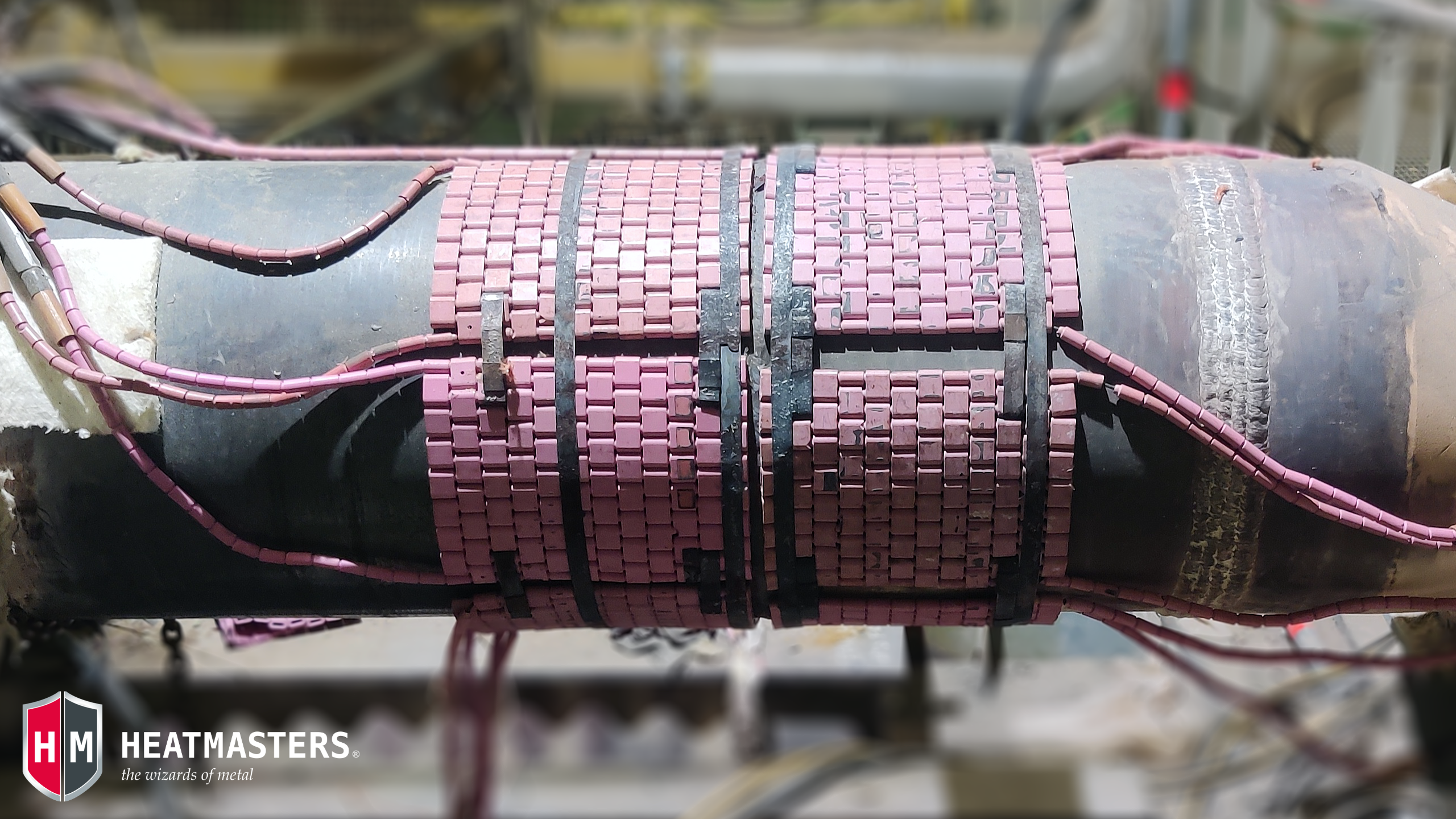
What is On-Site Heat Treatment?
On-site heat treatment refers to heat treatment processes that are carried out directly at the customer’s site instead of in a fixed workshop or furnace facility. It is commonly used for large, heavy or permanently installed components where transportation is impractical, costly or technically challenging.
Typical on-site heat treatment applications include preheating, post-weld heat treatment (PWHT) and controlled heating and cooling of welded structures. These processes are performed using mobile heat treatment equipment and precisely controlled temperature management systems.
On-site heat treatment allows critical thermal processes to be integrated seamlessly into construction, maintenance or repair work. It ensures that material properties, residual stresses and structural integrity meet applicable standards and project-specific requirements without removing components from their operating environment.
Why On-Site Heat Treatment Is Needed
Many industrial components cannot be easily transported to a workshop or furnace facility. Large pressure vessels, pipelines, boilers, structural components and heavy equipment are often permanently installed within industrial plants or construction sites.
In these situations, on-site heat treatment provides a practical solution. By bringing specialized heating equipment directly to the installation location, critical heat treatment processes can be performed safely and efficiently without dismantling the structure.
This approach reduces project delays, eliminates transportation risks and ensures that heat treatment can be performed immediately after welding or repair work. As a result, on-site heat treatment plays an essential role in modern industrial construction, maintenance and turnaround projects.
Typical Applications of On-Site Heat Treatment
On-site heat treatment is widely used across industries where welded structures and high-temperature processes are common. Typical applications include:
- Pressure vessels and process equipment
- Pipelines and piping systems
- Boilers and power plant components
- Structural steel constructions
- Heavy machinery and industrial equipment
- Petrochemical, oil and gas installations
These components often require precise temperature control to achieve the correct material properties and to reduce residual stresses caused by welding.
Common On-Site Heat Treatment Methods
Several heat treatment methods can be performed directly at industrial sites using portable equipment.
Preheating
Preheating is applied before welding to reduce temperature differences in the material and prevent cracking. It helps control cooling rates and improves weld quality, especially when working with high-strength steels or thick materials.
Post-Weld Heat Treatment (PWHT)
Post-weld heat treatment is used to reduce residual stresses and improve the mechanical properties of welded components. PWHT is particularly important for pressure equipment, pipelines and safety-critical structures operating under high temperature or pressure.
Controlled Heating and Cooling
In some cases, controlled heating and cooling cycles are required to stabilize material structures or prepare components for further processing. Accurate temperature control ensures uniform heating and prevents thermal stresses.
Mobile Heat Treatment Equipment and Process Control
On-site heat treatment relies on specialized portable equipment designed for field conditions. Heating can be performed using electrical resistance heaters, induction systems or gas-fired burners depending on the project requirements.
Temperature control is achieved using advanced monitoring and data logging systems. Multiple thermocouples are installed on the component to ensure accurate temperature measurement across the entire heated area.
Digital control units allow operators to follow precisely defined heating curves, ramp rates and holding times according to project specifications and applicable industry standards. All heating cycles are recorded, providing full documentation and traceability for quality assurance and audits.
Advantages of On-Site Heat Treatment
On-site heat treatment offers several operational and technical advantages for industrial projects.
First, it eliminates the need to transport large or complex components to external facilities. This reduces logistics costs, minimizes handling risks and shortens project schedules.
Second, it allows heat treatment to be integrated directly into construction, repair or maintenance workflows. Processes can be performed immediately after welding, which improves efficiency and project coordination.
Third, modern on-site heat treatment systems provide the same level of temperature accuracy, monitoring and documentation as fixed furnace operations. This ensures compliance with industry standards and customer requirements.
On-Site Heat Treatment as Part of Industrial Heat Treatment Services
On-site heat treatment is an important part of modern industrial heat treatment services. When performed by experienced specialists using properly designed equipment and carefully controlled thermal cycles, it delivers reliable and repeatable results even in demanding field environments.
At Heatmasters, on-site heat treatment projects are carefully planned to match the component geometry, material properties and technical requirements of each application. Professional process planning, precise temperature control and comprehensive documentation ensure that every project meets strict safety, quality and performance standards.
By performing heat treatment directly where it is needed, on-site heat treatment helps industrial operators maintain structural integrity, improve reliability and support safe long-term operation of critical equipment.
Latest Project Summaries
Heatmasters Expands to Iberia – New Service Center Now Open in Portugal
08.09.2026
Project Summary: On-Site Heat Treatment at the Montes del Plata Mill in Uruguay
18.02.2021
Project Summary: Integration of Modern Temperature Control System to an Existing Heat Treatment Furnace
20.11.2020
Latest News
Heatmasters Expands to Iberia – New Service Center Now Open in Portugal
08.09.2026
Could You Be Our Next Distributor or Representative?
15.06.2026
Auroora Yhtiöt Oyj is the new owner of Heatmasters Oy
12.12.2025