What Is Normalizing in Steel Heat Treatment?
05.03.2026
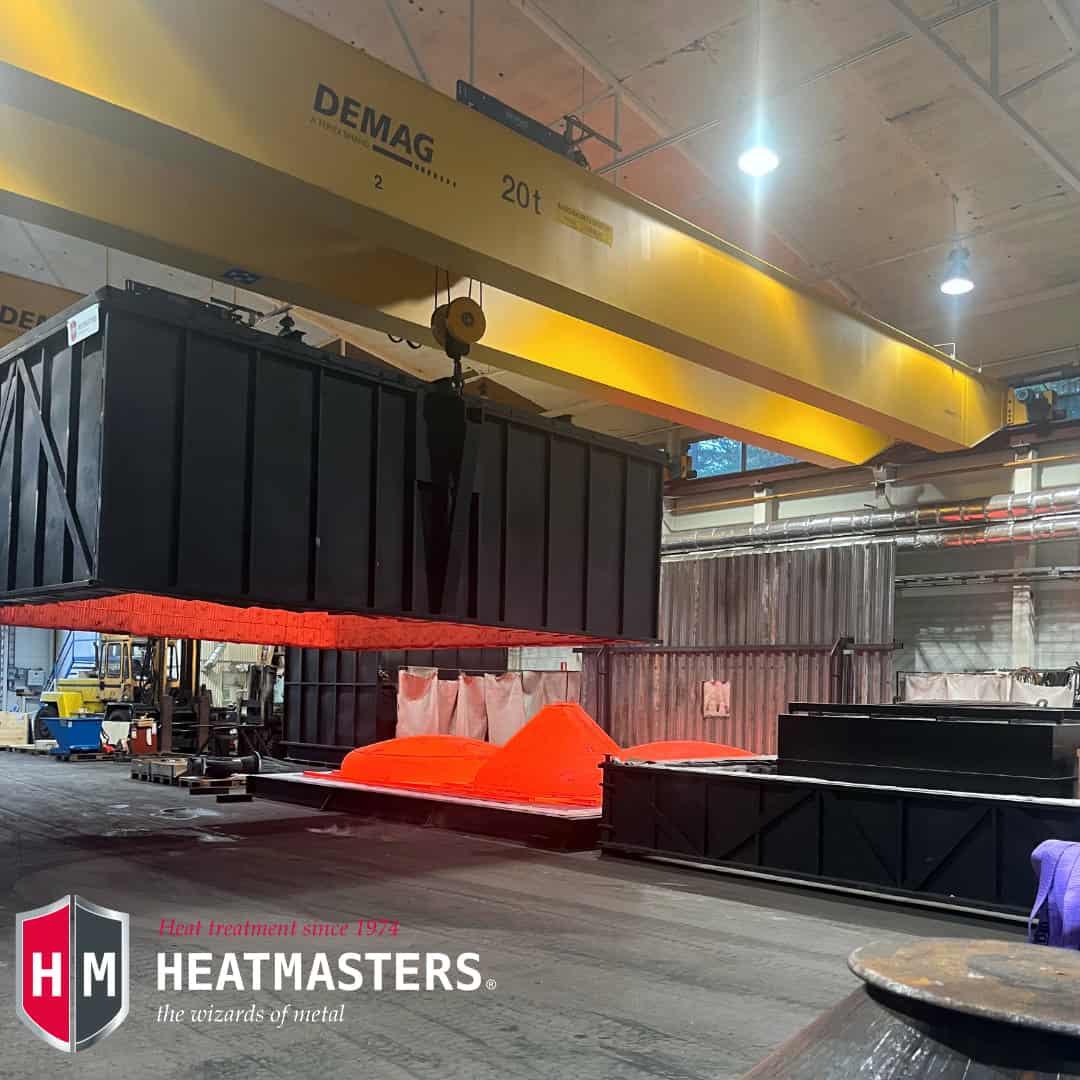
Normalizing is one of the classical heat treatment processes used in steel manufacturing and heavy industry. Its purpose is to refine grain structure, improve the uniformity of the microstructure and help achieve more consistent mechanical properties in demanding applications.
In steel heat treatment, normalizing involves heating the material above its critical transformation range into the austenitic region, holding it at temperature long enough to achieve a uniform structure and then allowing it to cool naturally in still air. Compared with slower furnace cooling, this air cooling stage produces a finer and more uniform microstructure.
Normalizing is particularly valuable for castings, forgings, formed steel products and welded components, especially when structural consistency is required after hot or cold working.
What Is the Purpose of Normalizing in Steel Heat Treatment?
The main objective of normalizing in steel heat treatment is to improve the internal structure of steel after manufacturing processes such as casting, forging, hot rolling and welding. These processes can leave the material with uneven grain size, coarse grained areas or non-uniform microstructures that may affect mechanical performance.
By applying normalizing heat treatment, manufacturers can restore structural consistency and achieve more predictable material properties throughout the component.
Key purposes of normalizing include:
- Refining the grain structure of steel
- Improving the uniformity of the microstructure
- Reducing the effects of earlier hot or cold forming processes
- Improving strength and toughness
- Preparing the material for further heat treatment processes
In industrial practice, normalizing is often used to improve the structure of steel castings, remove coarse grain caused by uneven forging or hot working, reduce coarse grained areas in welded components and equalize the properties of hot and cold worked products.
How the Normalizing Heat Treatment Process Works
The normalizing process consists of three main stages that must be carefully controlled to achieve the desired metallurgical results.
Heating the Steel
In the first stage, the steel is heated above its critical transformation temperature so that its structure transforms into austenite. This allows the existing microstructure to reset before controlled cooling.
The exact temperature depends on the steel grade, carbon content, alloying elements, section thickness and required properties. For many carbon and low alloy steels, normalizing is often carried out roughly in the range of 800–950 °C, but the correct temperature must always be selected according to the material specification and heat treatment procedure.
Holding at Temperature
Once the target temperature has been reached, the material is held at that temperature for a defined period. This soaking stage allows the temperature and internal structure to become uniform throughout the component.
The soaking time depends on the size, thickness, geometry and material grade of the component. Excessive holding times or unnecessarily high temperatures should be avoided, as they can promote grain growth instead of grain refinement.
Air Cooling
Unlike annealing, normalizing involves cooling the material in still air outside the furnace. This faster cooling rate compared with furnace cooling produces a finer grain structure and usually a more uniform ferritic-pearlitic microstructure in conventional carbon steels.
The result is steel that is typically stronger, more uniform and better suited for demanding industrial applications where structural consistency matters.
Benefits of Normalizing in Steel Heat Treatment
Normalizing offers several important advantages in steel processing and manufacturing.
One of the most significant benefits is grain refinement. A finer and more uniform grain structure can improve the balance of strength and toughness and help reduce local variations in material behaviour.
Normalizing also helps eliminate structural irregularities that may occur during earlier manufacturing stages, especially after casting, forging, hot rolling or welding.
Other important benefits include:
- Improved strength and toughness
- Better structural uniformity throughout the material
- Improved consistency after hot working or welding
- Improved machinability in certain steel grades
- Increased reliability of steel components in service
For many industrial components, achieving a uniform microstructure is essential to ensure reliable long term performance and repeatable material properties.
Where Is Normalizing Commonly Used?
Normalizing is widely used in steel manufacturing and fabrication when the material structure needs to be refined or equalized after earlier processing stages.
Typical applications include:
- Steel castings that require improved structure, machinability or toughness
- Forgings with uneven deformation or coarse grain
- Steel products that have been hot rolled, hot formed or cold formed and require more uniform properties
- Welded components where coarse grained zones must be minimized
- Heavy industrial parts that require dependable and repeatable performance
In many cases, normalizing is used either as a final treatment or as a preparatory step before later heat treatment operations.
What Is the Difference Between Normalizing and Annealing?
Normalizing and annealing are both heat treatment processes used to improve steel properties, but they serve different purposes and produce different results.
The main difference lies in the cooling method.
In annealing, the material is cooled slowly inside the furnace. This slow cooling produces a softer material with improved ductility, reduced hardness and better formability.
In normalizing, the material is cooled in air outside the furnace. This faster cooling rate produces a finer microstructure than furnace cooling and typically results in higher strength and somewhat higher hardness compared with annealed steel.
In practice, annealing is often selected when softness, ductility and formability are the main priorities, while normalizing is chosen when improved structural uniformity, grain refinement and a balanced combination of strength and toughness are needed.
Why Process Control Matters in Industrial Normalizing
Achieving reliable results in normalizing heat treatment requires more than simply reaching a target temperature. Industrial components are often large, complex and subject to demanding standards, which makes professional heat treatment expertise essential.
Reliable normalizing depends on careful control of the full process, including heating rate, temperature uniformity, soaking time, component geometry, section thickness and air cooling conditions. These factors directly influence the final grain structure and the consistency of mechanical properties.
For large pressure parts, forged components and welded structures, repeatable thermal processing and accurate documentation are essential to achieve dependable results.
Industrial Normalizing Solutions by Heatmasters
Heatmasters provides advanced heat treatment services and equipment designed for demanding industrial environments. With decades of experience in thermal processing, Heatmasters supports customers in achieving reliable and repeatable heat treatment results for large steel components and structures.
Our capabilities include:
- Industrial heat treatment for large steel components and structures
- Advanced furnace technology and thermal processing equipment
- Process control and documentation for demanding industry standards
- Tailored heat treatment solutions for specific customer requirements
Whether the goal is grain refinement, structural uniformity or preparation for further thermal processing, professional heat treatment execution helps ensure reliable metallurgical results.
Why Normalizing Is Important in Modern Steel Processing
Normalizing remains an essential process in modern steel heat treatment. By refining grain structure and improving material uniformity, the process helps ensure that steel components perform reliably in demanding industrial environments.
For manufacturers working with castings, forged components, hot or cold worked steel products or welded structures, normalizing can play a key role in achieving the desired balance of strength, toughness and durability.
When carried out with correct process control and metallurgical understanding, normalizing provides a dependable foundation for both component performance and further heat treatment operations.
👉 If you want to learn more about heat treatment services or equipment, our experts at Heatmasters are ready to help.
Latest Project Summaries
Heatmasters Expands to Iberia – New Service Center Now Open in Portugal
08.09.2026
Project Summary: On-Site Heat Treatment at the Montes del Plata Mill in Uruguay
18.02.2021
Project Summary: Integration of Modern Temperature Control System to an Existing Heat Treatment Furnace
20.11.2020
Latest News
Heatmasters Expands to Iberia – New Service Center Now Open in Portugal
08.09.2026
Could You Be Our Next Distributor or Representative?
15.06.2026
Auroora Yhtiöt Oyj is the new owner of Heatmasters Oy
12.12.2025