Heatmasters Service Center normalizing process for large steel components in an industrial furnace hall">
What Is Normalizing in Steel Heat Treatment?

March 5, 2026

Normalizing is one of the classical heat treatment processes used in steel manufacturing and heavy industry. Its purpose is to refine grain structure, improve the uniformity of the microstructure and help achieve more consistent mechanical properties in demanding applications.

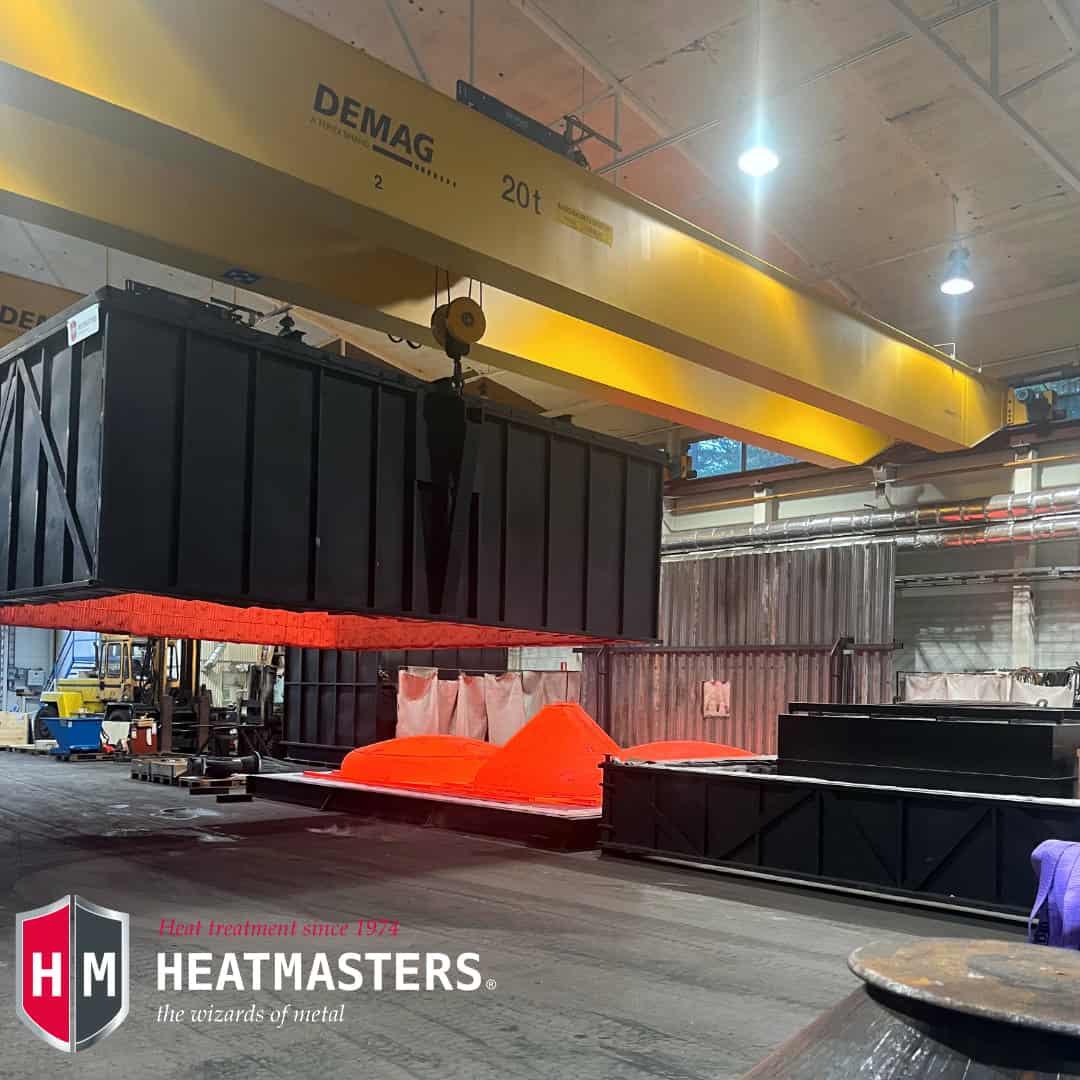
In steel heat treatment, normalizing involves heating the material above its critical transformation range into the austenitic region, holding it at temperature long enough to achieve a uniform structure and then allowing it to cool naturally in still air. Compared with slower furnace cooling, this air cooling stage produces a finer and more uniform microstructure.

Normalizing is particularly valuable for castings, forgings, formed steel products and welded components, especially when structural consistency is required after hot or cold working.

What Is the Purpose of Normalizing in Steel Heat Treatment?

The main objective of normalizing in steel heat treatment is to improve the internal structure of steel after manufacturing processes such as casting, forging, hot rolling and welding. These processes can leave the material with uneven grain size, coarse grained areas or non-uniform microstructures that may affect mechanical performance.

By applying normalizing heat treatment, manufacturers can restore structural consistency and achieve more predictable material properties throughout the component.

Key purposes of normalizing include:

  • Refining the grain structure of steel
  • Improving the uniformity of the microstructure
  • Reducing the effects of earlier hot or cold forming processes
  • Improving strength and toughness
  • Preparing the material for further heat treatment processes

In industrial practice, normalizing is often used to improve the structure of steel castings, remove coarse grain caused by uneven forging or hot working, reduce coarse grained areas in welded components and equalize the properties of hot and cold worked products.

How the Normalizing Heat Treatment Process Works

The normalizing process consists of three main stages that must be carefully controlled to achieve the desired metallurgical results.

Heating the Steel

In the first stage, the steel is heated above its critical transformation temperature so that its structure transforms into austenite. This allows the existing microstructure to reset before controlled cooling.

The exact temperature depends on the steel grade, carbon content, alloying elements, section thickness and required properties. For many carbon and low alloy steels, normalizing is often carried out roughly in the range of 800–950 °C, but the correct temperature must always be selected according to the material specification and heat treatment procedure.

Holding at Temperature

Once the target temperature has been reached, the material is held at that temperature for a defined period. This soaking stage allows the temperature and internal structure to become uniform throughout the component.

The soaking time depends on the size, thickness, geometry and material grade of the component. Excessive holding times or unnecessarily high temperatures should be avoided, as they can promote grain growth instead of grain refinement.

Air Cooling

Unlike annealing, normalizing involves cooling the material in still air outside the furnace. This faster cooling rate compared with furnace cooling produces a finer grain structure and usually a more uniform ferritic-pearlitic microstructure in conventional carbon steels.

The result is steel that is typically stronger, more uniform and better suited for demanding industrial applications where structural consistency matters.

Benefits of Normalizing in Steel Heat Treatment

Normalizing offers several important advantages in steel processing and manufacturing.

One of the most significant benefits is grain refinement. A finer and more uniform grain structure can improve the balance of strength and toughness and help reduce local variations in material behaviour.

Normalizing also helps eliminate structural irregularities that may occur during earlier manufacturing stages, especially after casting, forging, hot rolling or welding.

Other important benefits include:

  • Improved strength and toughness
  • Better structural uniformity throughout the material
  • Improved consistency after hot working or welding
  • Improved machinability in certain steel grades
  • Increased reliability of steel components in service

For many industrial components, achieving a uniform microstructure is essential to ensure reliable long term performance and repeatable material properties.

Where Is Normalizing Commonly Used?

Normalizing is widely used in steel manufacturing and fabrication when the material structure needs to be refined or equalized after earlier processing stages.

Typical applications include:

  • Steel castings that require improved structure, machinability or toughness
  • Forgings with uneven deformation or coarse grain
  • Steel products that have been hot rolled, hot formed or cold formed and require more uniform properties
  • Welded components where coarse grained zones must be minimized
  • Heavy industrial parts that require dependable and repeatable performance

In many cases, normalizing is used either as a final treatment or as a preparatory step before later heat treatment operations.

What Is the Difference Between Normalizing and Annealing?

Normalizing and annealing are both heat treatment processes used to improve steel properties, but they serve different purposes and produce different results.

The main difference lies in the cooling method.

In annealing, the material is cooled slowly inside the furnace. This slow cooling produces a softer material with improved ductility, reduced hardness and better formability.

In normalizing, the material is cooled in air outside the furnace. This faster cooling rate produces a finer microstructure than furnace cooling and typically results in higher strength and somewhat higher hardness compared with annealed steel.

In practice, annealing is often selected when softness, ductility and formability are the main priorities, while normalizing is chosen when improved structural uniformity, grain refinement and a balanced combination of strength and toughness are needed.

Why Process Control Matters in Industrial Normalizing

Achieving reliable results in normalizing heat treatment requires more than simply reaching a target temperature. Industrial components are often large, complex and subject to demanding standards, which makes professional heat treatment expertise essential.

Reliable normalizing depends on careful control of the full process, including heating rate, temperature uniformity, soaking time, component geometry, section thickness and air cooling conditions. These factors directly influence the final grain structure and the consistency of mechanical properties.

For large pressure parts, forged components and welded structures, repeatable thermal processing and accurate documentation are essential to achieve dependable results.

Industrial Normalizing Solutions by Heatmasters

Heatmasters provides advanced heat treatment services and equipment designed for demanding industrial environments. With decades of experience in thermal processing, Heatmasters supports customers in achieving reliable and repeatable heat treatment results for large steel components and structures.

Our capabilities include:

  • Industrial heat treatment for large steel components and structures
  • Advanced furnace technology and thermal processing equipment
  • Process control and documentation for demanding industry standards
  • Tailored heat treatment solutions for specific customer requirements

Whether the goal is grain refinement, structural uniformity or preparation for further thermal processing, professional heat treatment execution helps ensure reliable metallurgical results.

Why Normalizing Is Important in Modern Steel Processing

Normalizing remains an essential process in modern steel heat treatment. By refining grain structure and improving material uniformity, the process helps ensure that steel components perform reliably in demanding industrial environments.

For manufacturers working with castings, forged components, hot or cold worked steel products or welded structures, normalizing can play a key role in achieving the desired balance of strength, toughness and durability.

When carried out with correct process control and metallurgical understanding, normalizing provides a dependable foundation for both component performance and further heat treatment operations.

👉 If you want to learn more about heat treatment services or equipment, our experts at Heatmasters are ready to help.

">
What Is Annealing in Heat Treatment? Purpose, Benefits and Industrial Applications

March 5, 2026

Annealing is one of the most important groups of heat treatment processes used in metallurgy and manufacturing. It is widely applied in industries where controlled material properties, improved workability, reduced hardness and lower internal stress levels are essential.

In simple terms, annealing involves heating a material to a selected temperature, holding it there for a defined period and then cooling it in a controlled manner. Depending on the material and the purpose of the treatment, annealing can be used to soften steel, restore ductility after cold working, reduce residual stresses, improve machinability or make the microstructure more uniform.

Annealing plays a crucial role in ensuring that metals and alloys perform reliably in demanding industrial environments and are suitable for further manufacturing stages such as machining, forming, welding or additional heat treatment.

In this article, we explain what annealing is, why it is used, how different annealing methods differ and what factors influence the final result in industrial heat treatment.

What Is the Purpose of Annealing?

The purpose of annealing is to improve or restore the condition of a material after manufacturing operations such as hot working, cold working, casting, forging, rolling, machining or welding. These processes may leave the material with residual stresses, excessive hardness, reduced ductility or an uneven microstructure.

Annealing is used to correct these conditions in a controlled and predictable way. In industrial heat treatment, the exact objective always depends on the material grade, previous processing history and the required final properties. Typical objectives of annealing include:

  • Reducing residual stresses caused by welding, machining or forming
  • Lowering hardness when improved workability is needed
  • Improving ductility and formability
  • Improving machinability for later production stages
  • Restoring a more uniform microstructure
  • Preparing the material for further heat treatment or fabrication

For example, cold-worked steel or other alloys may become harder and less ductile during deformation. Annealing can restore workability and make later forming or machining operations easier and safer.

Annealing Is a Group of Heat Treatment Processes

In industrial practice, annealing is not just one single treatment. It is a broader category that includes several process variants selected according to the desired metallurgical result.

Common annealing methods include stress relief annealing, soft annealing, recrystallization annealing, diffusion annealing and, for certain alloyed and stainless steels, solution annealing. These processes differ in temperature range, holding time and cooling method.

Stress Relief Annealing

Stress relief annealing is used to reduce residual stresses caused by welding, machining, thermal cutting or uneven forming. The main goal is dimensional stability and lower internal stress levels rather than maximum softening.

In steels, stress relief is typically carried out below the critical transformation range. In many applications, this means approximately 550–650 °C, although the correct temperature always depends on the steel grade, component geometry and specification. In stainless steels and highly alloyed materials, the applicable range may differ significantly.

Soft Annealing

Soft annealing is used when lower hardness, improved machinability and better formability are required. In carbon and low-alloy steels, soft annealing often involves heating near the critical range followed by slow furnace cooling. The aim is to produce a softer and more workable structure.

Depending on steel composition, soft annealing temperatures are often in the range of roughly 680–780 °C, but the selected cycle must always be based on the material specification and desired hardness level.

Recrystallization Annealing

Recrystallization annealing is particularly relevant after cold working. When a metal has been plastically deformed, its grain structure becomes strained and ductility decreases. Recrystallization annealing forms new, strain-free grains and restores workability.

The treatment temperature is above the recrystallization temperature of the material, but below the melting point. In practice, the suitable temperature depends strongly on the alloy system, the amount of prior deformation and the required result.

Diffusion Annealing

Diffusion annealing, also called homogenization annealing, is used to reduce chemical segregation and improve structural uniformity. It is typically applied to large castings or semi-finished products before further processing.

This treatment is usually performed at high temperatures and long holding times. For some steels and cast materials, diffusion annealing may be carried out in the range of approximately 1050–1300 °C with holding times that can extend to several tens of hours, depending on the material and section size.

Solution Annealing

For stainless steels and certain highly alloyed materials, solution annealing is used to dissolve precipitates into the structure and restore a more uniform microstructure before rapid cooling. In these cases, annealing does not follow the same slow-cooling logic as many conventional carbon steel annealing treatments.

Typical solution annealing temperatures for austenitic stainless steels are often around 1050–1150 °C, followed by rapid cooling. The holding time must be long enough to achieve the desired metallurgical effect, but not unnecessarily long, as excessive time at temperature may promote grain growth.

How the Annealing Process Works

Although different annealing methods have different goals, the thermal cycle usually includes three main stages: heating, holding and controlled cooling.

Heating

The material is heated to a selected temperature suitable for the material grade and treatment objective. In many steel applications, the heating temperature may be below, near or above the critical transformation range depending on whether the purpose is stress relief, softening, recrystallization or microstructural homogenization.

Holding

Once the target temperature has been reached, the material is held there long enough for the intended metallurgical changes to take place. Required holding time depends on the material, section thickness, furnace load and the nature of the treatment.

In industrial heat treatment, soaking time is often one of the most critical variables. Too short a holding period may result in incomplete transformation or uneven properties, while excessive holding may increase the risk of grain growth, oxidation or unnecessary production time.

Controlled Cooling

The cooling method is a defining part of the annealing cycle. In many annealing processes, especially for carbon and low-alloy steels, slow cooling in the furnace is used to promote a softer and more stable microstructure. However, some annealing methods, such as solution annealing, require much faster cooling.

For this reason, annealing should always be defined by the required metallurgical outcome, not only by the general idea of heating and slow cooling.

Technical Factors That Influence Annealing Results

Successful annealing depends on much more than selecting a nominal temperature. In practice, final results are influenced by several technical factors that heat treatment professionals pay close attention to. Key factors that influence annealing results include:

  • Material grade and chemical composition: carbon content and alloying elements strongly affect suitable temperature ranges and cooling behaviour
  • Previous processing history: hot working, cold working, welding or casting may leave the material in very different initial conditions
  • Section thickness and component geometry: heavy sections require careful temperature equalization and longer soaking times
  • Heating and cooling rates: these affect structural development, dimensional stability and residual stresses
  • Surface protection: scaling and decarburization must be considered, especially at elevated temperatures
  • Furnace atmosphere and process control: consistent heat treatment requires controlled and documented conditions

In carbon and low-alloy steels, high-temperature exposure may lead to surface oxidation and decarburization if the process is not properly controlled. In some applications, this is an important quality consideration, particularly when dimensional tolerances, surface quality or hardness profile matter.

Benefits of Annealing in Industrial Applications

Annealing provides several benefits that make it an essential part of industrial heat treatment. One of the most important is improved workability. A material that is softer, more ductile and less stressed internally is easier to machine, form and fabricate reliably.

Annealing can also improve structural consistency, reduce the risk of cracking during further processing and help create more predictable mechanical behaviour in service. In industrial applications, the main benefits of annealing include:

  • Reduced residual stresses
  • Improved ductility and formability
  • Lower hardness where required
  • Improved machinability
  • Better dimensional stability
  • More uniform microstructure
  • Improved reliability in further manufacturing stages

Annealing Compared with Other Heat Treatment Processes

Annealing should not be confused with normalizing, quenching, tempering or quenching and tempering. These are related heat treatment processes, but their objectives and cooling methods are different.

  • Normalizing is typically used to refine grain structure and improve structural uniformity through heating and air cooling.
  • Quenching aims to form a hard structure by cooling fast enough to exceed the critical cooling rate.
  • Tempering is performed after quenching to reduce brittleness and adjust hardness and toughness.
  • Quenching and tempering is used when a combination of high strength and adequate toughness is required.

In other words, annealing is generally used to soften, relieve stress or restore workability, while quenching-based processes are used to increase hardness and strength before final property adjustment by tempering.

Industrial Applications of Annealing

Annealing is used across a wide range of industries and component types. Typical applications include castings, forgings, rolled products, welded fabrications, pressure equipment components, structural steel parts and stainless steel process equipment.

Depending on the material and the manufacturing route, annealing may be used as an intermediate treatment between process stages or as a final heat treatment to achieve the required structure and workability.

Annealing Services and Equipment by Heatmasters

Successful annealing requires accurate temperature control, suitable equipment and process expertise. The correct thermal cycle depends on the material, section size, geometry and required final properties.

At Heatmasters, heat treatment expertise supports demanding industrial applications where process control, repeatability and documented quality are essential. Depending on the application, annealing can be carried out in controlled furnace environments or as part of a broader thermal processing solution. Heatmasters supports industrial annealing applications with:

  • Industrial heat treatment services for demanding applications
  • Furnace solutions for controlled thermal processing
  • Temperature measurement, control and documentation
  • Process expertise for large components and industrial structures
  • Tailored heat treatment solutions based on customer requirements

By combining process knowledge, reliable heat treatment equipment and accurate control, Heatmasters helps customers achieve consistent and predictable results.

Annealing as a Key Part of Modern Heat Treatment

Annealing remains one of the most important groups of heat treatment processes in modern metallurgy. Its role in stress relief, softening, recrystallization and structural homogenization makes it essential in many stages of industrial manufacturing.

When the correct annealing method is selected and the process is carefully controlled, the result is a material with more suitable properties for machining, forming, welding or demanding service conditions.

For industries where quality, reliability and process control matter, professional heat treatment expertise makes a measurable difference.

If you want to learn more about industrial heat treatment services or equipment, the experts at Heatmasters are ready to help.

Refractory Dry-Out Services">
Refractory Dry-Outs – A Critical Step for Safe and Long-Lasting High-Temperature Operations

February 24, 2026

Refractory dry-out is a vital phase in the commissioning of high-temperature industrial equipment. When executed correctly, it plays a decisive role in ensuring the mechanical integrity, thermal performance and long-term reliability of refractory linings. Lack of proper dry-out, or performing it incorrectly, can lead to cracking, spalling, premature failures and costly downtime.

At Heatmasters, refractory dry-outs are treated as a controlled industrial heat treatment process—planned, executed and documented with the same precision as any critical thermal operation.

What Is a Refractory Dry-Out?

A refractory dry-out is a controlled thermal process designed to remove residual moisture from newly installed or repaired refractory linings before equipment start-up. Moisture present in the refractory mix is introduced during casting, curing and exposure to ambient conditions.

Chemically bound water incorporated into the refractory structure during curing must be carefully removed during the dry-out process. If moisture is not removed slowly and gradually according to the refractory manufacturer’s specifications, rapid heating can cause internal steam pressure build-up, leading to cracking, spalling or even catastrophic lining failure.

A professional refractory dry-out follows carefully defined heating curves, ramp rates and holding times to safely release moisture while preserving the structural integrity of the lining.

Why Professional Refractory Dry-Out Matters

Preventing Damage and Premature Failure
Uncontrolled or accelerated heating can result in thermal shock and internal pressure build-up caused by retained moisture within the refractory lining. A properly executed dry-out minimizes these risks by maintaining precise temperature control throughout the process.

Maximising Refractory Service Life
Correct dry-out improves structural strength and resistance to thermal cycling, directly extending the service life of the refractory lining.

Ensuring Safe and Reliable Start-Up
Dry-outs reduce the risk of early failures during commissioning, protecting equipment and ensuring stable operational performance.

Compliance with Manufacturer Specifications
Each refractory type has specific thermal requirements specified by the manufacturer. Professional dry-outs strictly adhere to approved heating curves, soak times and ramp rates provided by the manufacturer.

Accurate Temperature Control and Full Documentation
Modern digital control systems enable continuous monitoring, logging and traceability—essential for quality assurance, audits and future reference.

In many projects, documented proof of a properly executed dry-out in the form of a drying certificate is increasingly required to maintain refractory manufacturer warranty validity. Reliable temperature records and certified drying procedures therefore play a critical role not only in quality assurance, but also in securing warranty coverage for the refractory lining.

Where Refractory Dry-Outs Are Required

Refractory dry-outs are commonly required before commissioning or start-up of:
• Industrial furnaces
• Kilns
• Boilers
• Reactors
• Incinerators
• Other high-temperature process equipment

Each application presents unique challenges related to lining thickness, geometry, operating temperatures and site conditions.

Heating Methods Used in Refractory Dry-Outs

Depending on project requirements, refractory type and site conditions, dry-outs can be performed using:

Gas-Fired Burners

• High heating capacity
• Suitable for large or complex structures
• Independent of site electrical power availability

Electrical Heating Elements

• Precise temperature control
• Ideal for controlled environments and smaller systems
• Low-emission option when powered by clean electricity

The choice of heating method is always based on technical suitability, safety and compliance with refractory manufacturer guidelines.

Refractory Dry-Out as Part of Industrial Heat Treatment

Refractory dry-out should not be treated as a simple warm-up phase. It is a critical industrial heat treatment process that requires expert planning, execution and control.

Heatmasters provides refractory dry-out services as a fully integrated solution, covering:
• Process planning and thermal cycle design
• Selection and installation of heating equipment
• Execution and real-time monitoring
• Digital temperature control and documentation
• Coordination with refractory manufacturers, EPC contractors and plant operators

Each dry-out is carefully tailored to match the refractory material, lining thickness and equipment geometry, ensuring consistent and repeatable results even in demanding industrial environments.

Additional Services Supporting Refractory Dry-Out Projects

In addition to dry-out execution, Heatmasters supports turn-key and complex projects with:
• Project management and supervisory services
• Skilled staff rental
• Process improvement, digitalization and outsourcing through an integrated service model

This holistic approach helps streamline project execution, reduce interfaces and improve overall efficiency.

Experience, Expertise and Trust

Successful refractory dry-outs require more than heating equipment. They demand experience, technical understanding and precise execution. With a strong track record in industrial heat treatment and close cooperation with refractory manufacturers and contractors, Heatmasters ensures that each dry-out is performed safely, compliantly and to the highest technical standards.

By treating refractory dry-outs as a critical industrial process—not a formality—plant operators can significantly reduce risk, extend refractory life and secure reliable long-term operation.


Frequently Asked Questions About Refractory Dry-Out

Why is refractory dry-out required before start-up?
Refractory dry-out removes residual moisture from the lining in a controlled manner, preventing steam pressure build-up that can cause cracking, spalling or premature failure during commissioning.

How long does a refractory dry-out typically take?
The duration depends on refractory type, lining thickness and equipment geometry. Dry-out cycles may range from several hours to several days according to manufacturer specifications.

What happens if refractory dry-out is skipped?
Skipping dry-out can lead to internal pressure build-up, thermal shock and severe lining damage, often resulting in costly repairs and delayed start-up.

Is a drying certificate required for warranty validation?
In many projects, documented proof of a properly executed dry-out in the form of a drying certificate is required to maintain refractory manufacturer warranty validity.

What heating methods are used for refractory dry-outs?
Dry-outs can be performed using gas-fired burners or electrical heating elements, depending on project requirements, site conditions and manufacturer guidelines.